What Is a Raffle, and Can a Business Run One Legally?
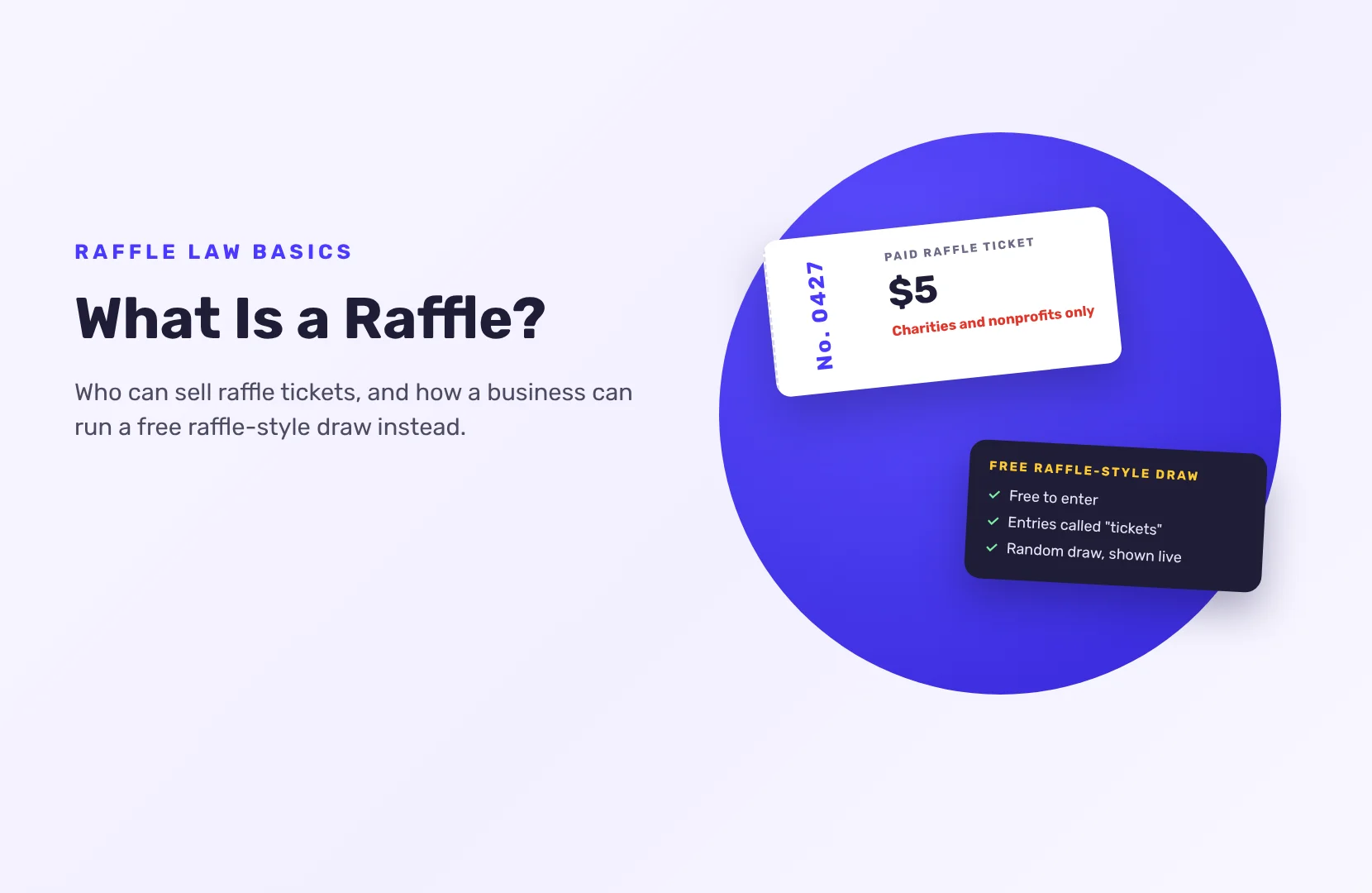
A raffle is a prize draw where people buy numbered tickets and the host draws one ticket at random to pick the winner. Because a paid raffle combines a prize, chance and a payment, US states treat it as a kind of lottery. In states such as California, New York and Florida, only charities and similar nonprofits can run one, under state rules. A business that wants a raffle-style draw usually runs a free-to-enter giveaway instead.
This guide explains the general rules in plain language. It isn’t legal advice. Rules change and depend on where you and your entrants are, so check with a lawyer before you launch a large or multi-state promotion.
What is a raffle?
The classic raffle: a school, club or charity sells tickets, keeps the stubs in a drum and draws one at an event. The more tickets you hold, the better your odds. Finally, the money raised goes to a cause.
For example, New York’s law puts it in one sentence: a raffle is a game of chance “in which a participant pays money in return for a ticket or other receipt,” and prizes go to the tickets drawn (N.Y. Gen. Mun. Law §186).
In other words, the payment is what matters. Take it away and you have something else.
Raffle vs lottery vs giveaway
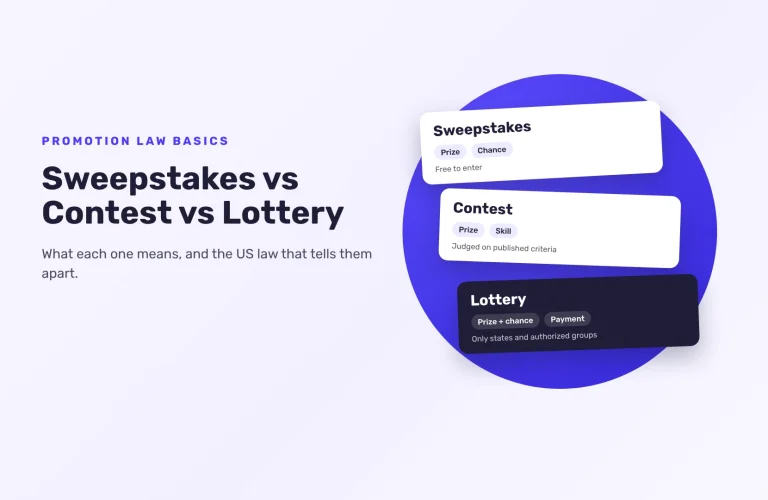
To sort prize promotions, ask three questions: is there a prize, does chance decide the winner, and do people pay to enter? When all three are yes, it’s a lottery. That’s how most states define a lottery (Holland & Knight). More in sweepstakes vs contest vs lottery.
- However, a paid raffle has all three, so it’s a lottery, allowed only where a state carves out room for it, mostly for charities. New York’s definition of an unlawful lottery leaves out raffles as its raffle law defines them (N.Y. Penal Law §225.00).
- A giveaway or sweepstakes has a prize and chance, but no payment. Federal law calls a sweepstakes “a game of chance for which no consideration is required to enter” (39 U.S.C. §3001(k)).
- So a free online “raffle” is really a giveaway with a random draw. People earn entries (you can call them tickets) without paying, and you draw one at the end.
Can a business run a raffle?
A paid raffle: generally no
Usually, only nonprofits can sell raffle tickets, and each state sets its own conditions. Here are three examples:
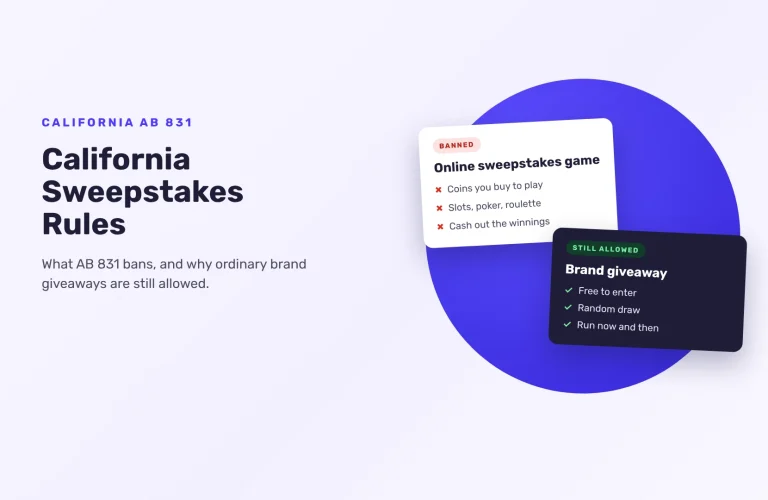
- California. Only eligible tax-exempt nonprofits that have qualified to do business in California for at least a year can run raffles. Most must register with the Attorney General’s Registry before selling a single ticket, at least 90 percent of ticket revenue must go to charitable purposes in California, and nobody can run a raffle or sell tickets over the internet, though they can advertise it online (California Attorney General, citing Penal Code §320.5).
- New York. Raffles are for authorized organizations: bona fide religious, charitable, educational, fraternal and service groups (N.Y. Gen. Mun. Law §186). Small raffles (under $5,000 net from one raffle and under $30,000 a year) need no license; bigger ones need registration or a games of chance license, and selling tickets online needs the Gaming Commission’s approval first (New York State Gaming Commission).
- Florida. Certain tax-exempt organizations may hold drawings by chance, but even then they can’t make anyone pay to enter. They can suggest a minimum donation, but materials must say “no purchase or contribution is necessary” (Fla. Stat. §849.0935). Setting up any other lottery is unlawful (Fla. Stat. §849.09).
So a shop selling $5 tickets for a prize basket is, in most places, running a lottery that the law doesn’t allow. Also, even a business raising money for a charity should check whether the charity itself has to run the raffle.
A free raffle-style draw: yes, as a giveaway
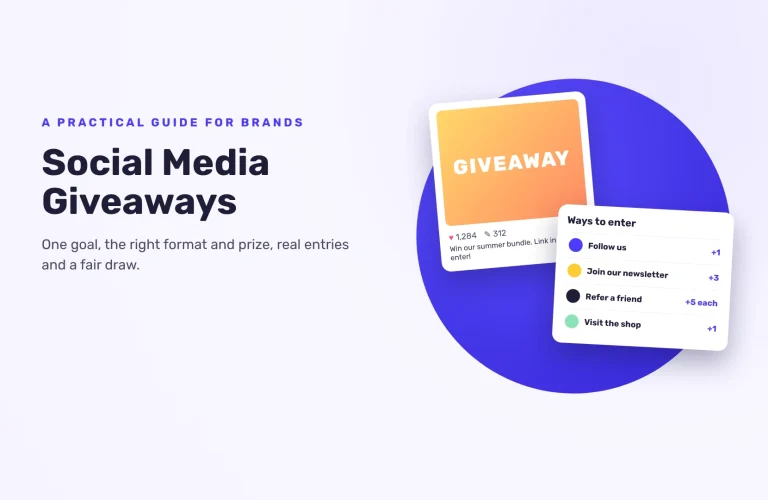
Instead, what a business can usually do is run the same experience for free. People sign up, earn entries for actions like joining your newsletter or visiting your website, and you draw one entry at random. (On Instagram and Facebook, Meta doesn’t allow prizes in exchange for likes or follows; see Instagram contest rules.) The FTC’s line for consumers sums up why this works: real sweepstakes are free and by chance (FTC).
What about “buy something, get a ticket”?
That’s a sweepstakes with purchase entries, not a raffle. As a result, it needs a free way to enter as well, so that buying isn’t the only way to get a chance. Read what “no purchase necessary” means before you set one up.
How to run a free online raffle
The full setup is in our guide on how to do a raffle online. In short:
- Make entry free. No ticket sales, no required purchase.
- Decide what counts as a ticket. One entry per person, or extra entries for extra actions.
- Publish official rules. Who can enter, the dates and time zone, the prize and its value, and how you draw and contact the winner.
- Draw at random from every eligible entry after entries close.
- Check and contact the winner, then announce them with their permission.
In SweepWidget, a few features make a giveaway feel like a raffle:
- Call entries “tickets”. Custom entry terminology (Pro plan and up) lets entrants see “You earned 5 Tickets!” instead of “Entries”.
- Weighted draw. Pick A Winner draws at random from all entries, so five tickets mean better odds than one, and it never picks the same winner twice.
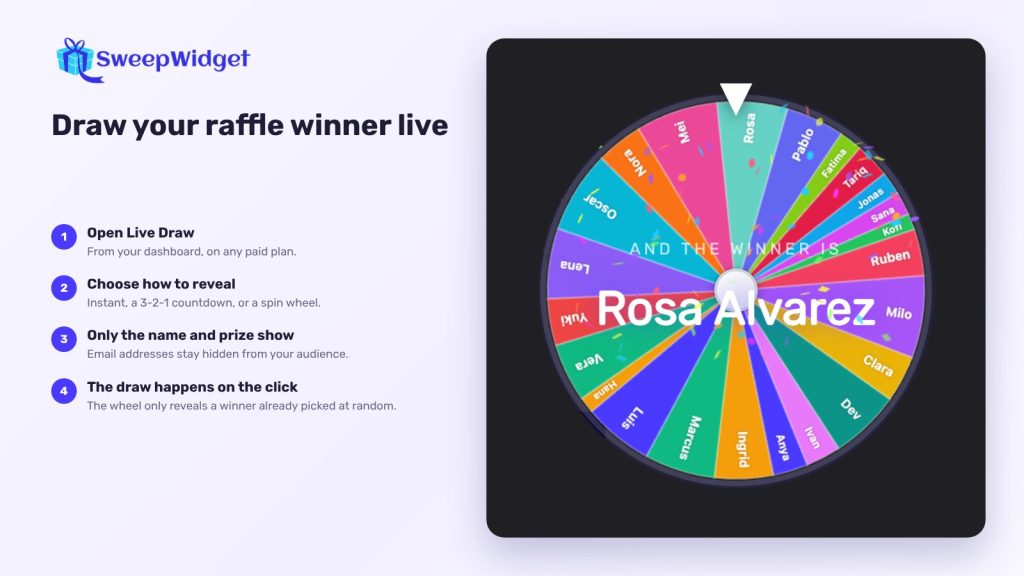
- Live Draw (paid plans, Pro and up) reveals the winner on screen, instantly, after a countdown or on a spin wheel, showing only the winner’s name and prize. SweepWidget picks the winner at random the moment you click; the wheel only reveals it (help doc).
- Paper entries. In addition, on Premium and up, upload entries collected at an event from a CSV file, with an entry amount per person, so they join the online draw.
Ready to draw? See how to randomly pick a winner in SweepWidget.
FAQ
A prize draw where people buy tickets and one ticket is drawn at random. More tickets mean better odds, never a guaranteed win.
Legally, a paid raffle is a type of lottery: prize, chance and payment. States allow it mainly for charities and similar groups, under their own rules.
It depends on the state and on who you are. California prohibits running a raffle over the internet; New York requires Gaming Commission approval to sell tickets online. In all three states above, selling raffle tickets is limited to nonprofits and similar groups.
A free-to-enter draw is a giveaway, which businesses commonly run. You still need clear rules and should check the laws where your entrants live.
Payment. A raffle sells tickets; a giveaway is free to enter. Both draw the winner at random.