California Sweepstakes Rules: What AB 831 Bans and What’s Still Allowed
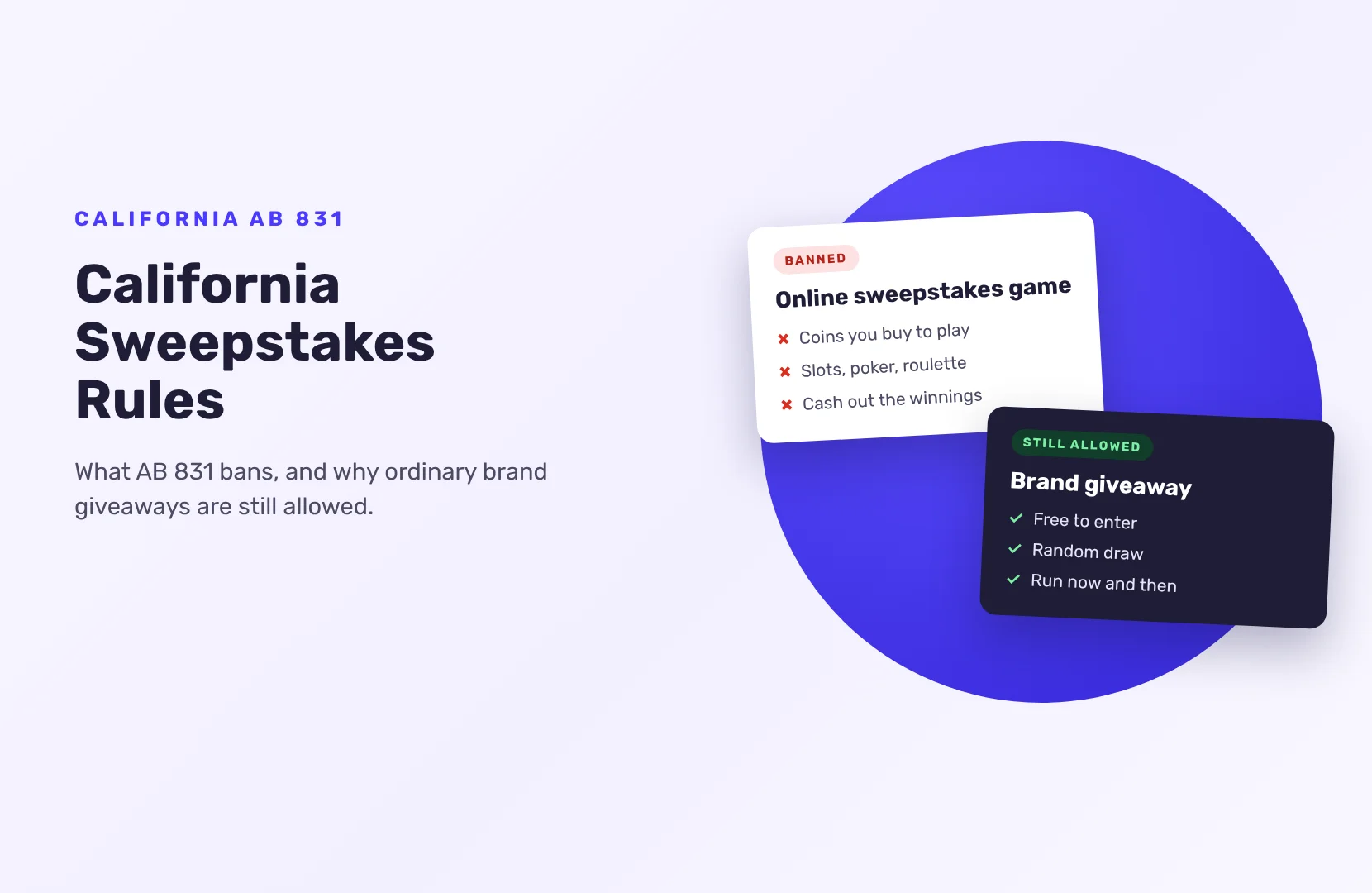
California hasn’t banned giveaways. AB 831, signed in October 2025, bans “online sweepstakes games”. In other words, it targets sweepstakes casinos that sell coins, simulate gambling and pay out cash. The law also says it doesn’t make unlawful game promotions or sweepstakes that businesses run “on a limited and occasional basis as an advertising and marketing tool”. The promotion has to go along with real sales of products or services. So ordinary brand sweepstakes still run under California’s existing rules in Business and Professions Code §17539 and the sections after it. They also stay free to enter.
This guide explains the general rules in plain language. It isn’t legal advice. Rules change and depend on where you and your entrants are. So check with a lawyer before you launch a large or multi-state promotion.
What is AB 831?
AB 831 (Statutes of 2025, Chapter 623) became law when Governor Newsom signed it on October 11, 2025. Its changes then took effect on January 1, 2026. It did two things:
- Added Penal Code §337o, which makes it unlawful to “operate, conduct, or offer an online sweepstakes game” in California. It also makes it unlawful to knowingly and willfully support one. That reaches payment processors, geolocation providers, gaming content suppliers, platform providers and media affiliates. A violation is a misdemeanor. The penalty is a fine of $1,000 to $25,000, up to a year in county jail, or both. (read §337o)
- Amended Business and Professions Code §17539.1 so that its ban on simulated-gambling sweepstakes clearly covers websites and apps. It also covers dual-currency payment systems. (read §17539.1)
Is my brand giveaway an “online sweepstakes game”?
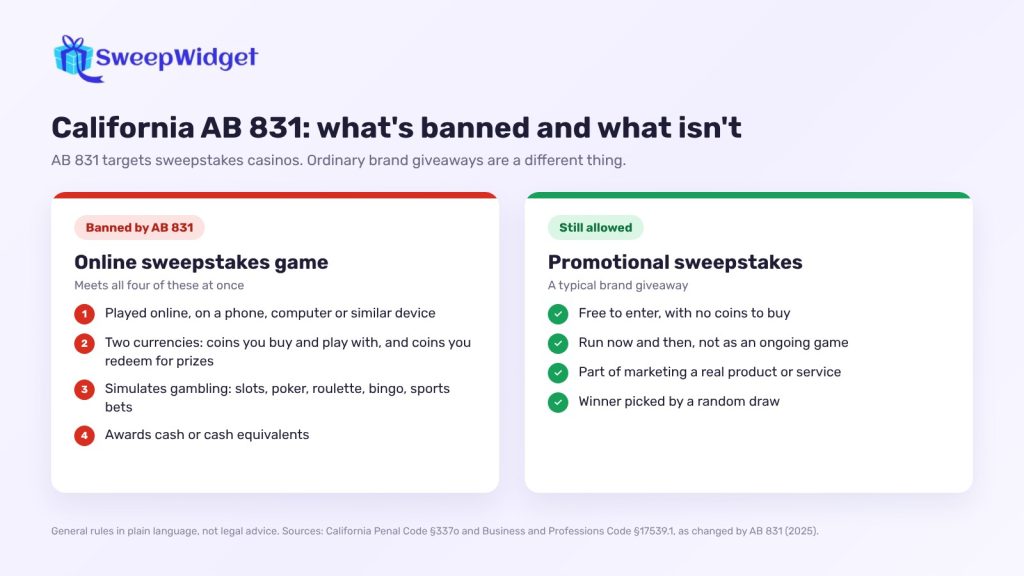
A typical brand giveaway doesn’t fit the definition. Under §337o, an “online sweepstakes game” is a game, contest or promotion that meets all four of these conditions:
- It’s available online or on a phone, computer or similar device.
- It uses a dual-currency system: one kind of coin or token you can buy (or get as a bonus) and play with. Players can then exchange a second kind for prizes or cash.
- It simulates gambling: slot machines, video poker, table games like blackjack or roulette, lotteries, bingo or sports wagering.
- It awards cash or cash equivalents.
A typical brand giveaway has no coins to buy, no casino games and often no cash prize. People enter with an email, earn extra entries for referring friends or joining your newsletter, and a random draw picks the winner. On top of that, §337o and the simulated-gambling rule in §17539.1 both say they don’t make unlawful:
“game promotions or sweepstakes conducted by for-profit commercial entities on a limited and occasional basis as an advertising and marketing tool that are incidental to substantial bona fide sales of consumer products or services and that are not intended to provide a vehicle for the establishment of ongoing gambling or gaming.”
That rule in §17539.1 also says it “does not make a game that does not award cash prizes or cash equivalents unlawful.”
If your promotion looks like a casino game, for example a slot-style or scratch-card reveal of prizes, have it reviewed. That’s because Section 17539.1(a)(12) covers methods that simulate gambling on a screen and connect players with sweepstakes prizes. It has the same carve-out for occasional marketing promotions.
What California’s sweepstakes rules ask of sponsors
Keep it free
California’s Penal Code §319 defines a lottery as distributing property by chance. The people taking part have “paid or promised to pay any valuable consideration” for the chance, “whether called a lottery, raffle, or gift enterprise.” Prize plus chance plus payment is a lottery. Take the payment out and you have a sweepstakes. The FTC’s consumer guidance says the same at the national level. In short, it’s illegal to make people pay or buy to enter or improve their odds.
If purchases earn entries, offer a free way to enter with the same chance of winning. California’s §17539.15 says a sponsor can’t put entries that come without an order at any disadvantage in the draw. Also, solicitations can’t suggest that buying improves your chances. More in no purchase necessary. In addition, a sponsor can’t charge a winner a fee to receive a prize. Nor can it charge anyone for information about the prize or the sweepstakes (§17539.15(l)).
Don’t mislead anyone
Section 17539.1 lists unfair practices in running “any contest or sweepstakes.” For a typical promotion, the ones that matter most are:
- Misrepresenting the odds of winning any prize.
- Misrepresenting the rules, terms or conditions of entry.
- Not clearly disclosing “the exact nature and approximate value of the prizes when offered.”
- Not awarding all prizes “of the value and type represented.”
- Saying or implying someone has won, or that the sponsor has picked them to win, when that isn’t true.
- Calling an entry or number “lucky,” or suggesting some entries have an advantage others don’t.
- Using people’s names for promotion in a mailing to someone else without their consent.
- Using fake checks or currency without “SPECIMEN—NONNEGOTIABLE” printed on them.
Say “no purchase necessary” clearly
Section 17539.15 covers sweepstakes entry materials sent out as solicitations, such as mailings. It asks for a clear no-purchase message in the official rules. The message goes in its own paragraph, in capital letters no smaller than the largest type in the rules, such as: “NO PURCHASE OR PAYMENT OF ANY KIND IS NECESSARY TO ENTER OR WIN THIS SWEEPSTAKES.” The official rules must also say when the sponsor will pick the winners. So using the same wording on an online entry page is a sensible habit. More in sweepstakes official rules.
Paid contests have extra rules
The detailed puzzle-disclosure, record-keeping and refund rules in §17539 to §17539.2 target paid contests. These are contests that may be “conditioned upon the payment of consideration,” as §17539.3(e) defines “contest.” A paid contest also can’t make a prize depend on a minimum number of entries (§17539.35). A free sweepstakes isn’t built that way, but the rules above still apply to it. Meanwhile, a free photo contest judged on skill is neither a paid contest nor a sweepstakes under these definitions. Even so, clear, honest rules are still the safe habit. See sweepstakes vs contest vs lottery for the difference.
Registration
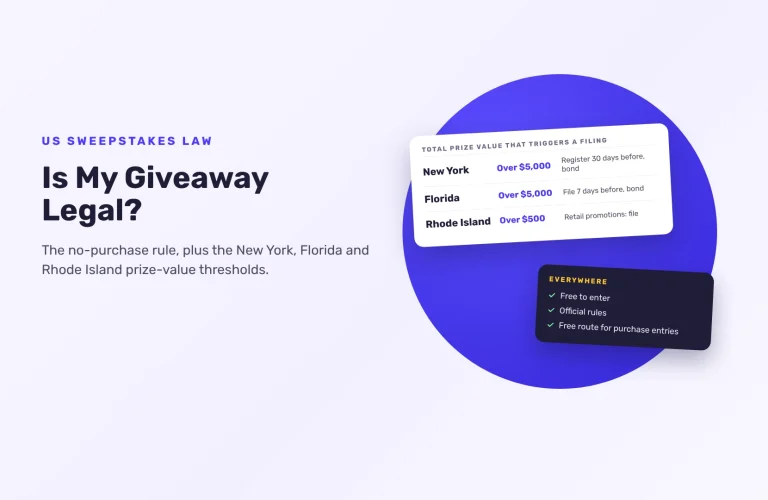
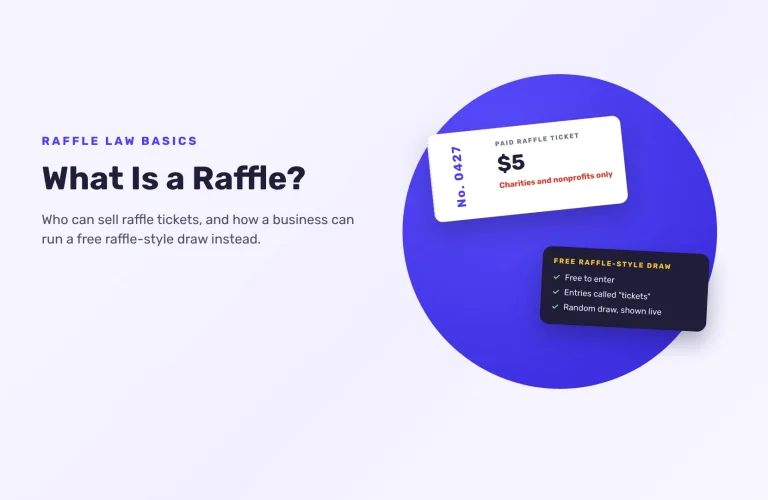
None of the California sections we read for this guide asks a sponsor to register or bond a free sweepstakes. The only registration rule in this part of the code covers sweepstakes run through 900 numbers (§17539.55). These have to register with the Department of Justice. However, other states differ. For example, New York and Florida require filings when total prizes top $5,000 (see is my giveaway legal?). Charity raffles are also a separate case. In California, only eligible nonprofits can run them, and most must register with the Attorney General first (see what is a raffle?).
A California-ready checklist
- No purchase or payment to enter or win. If purchases earn entries, add a free method with equal odds.
- No coins, no casino games, no cash-out loop. Keep the promotion occasional and tied to marketing what you sell.
- State the prizes with their nature and approximate value, and award every one as described.
- Write accurate official rules: sponsor, eligibility, dates and time zone, and how to enter (including the free method). Also list prizes and values, odds, and when and how you pick winners.
- Never tell someone they’ve won until they have.
- Never charge a winner a fee to claim a prize.
- Keep records of entries, the draw and the winners.
In SweepWidget, the terms and conditions generator builds rules from your details. They start with “NO PURCHASE IS NECESSARY TO ENTER OR WIN.” You can edit them before you publish. First, though, you agree that making them fit your area is your responsibility. If you need to limit entry by state, geo-targeting (Premium plan and up) can allow or block single US states, including California. Location comes from the visitor’s IP address, so say who can enter in your rules too. Adding purchase entries to a California giveaway? See how a free alternative method of entry works.
FAQ
Promotional sweepstakes that are free to enter are still allowed. AB 831 bans online sweepstakes games, meaning dual-currency, casino-style games that award cash. It expressly leaves occasional marketing promotions tied to real product sales alone.
Not as written. A free giveaway with a random draw doesn’t use a dual-currency system or simulate casino games, and §337o excludes occasional marketing promotions by businesses. Instagram has its own rules, though: Meta’s spam policy doesn’t allow prizes in exchange for likes, follows, shares or hashtags (see Instagram giveaway rules).
Not without a free way to enter. California’s lottery definition (Penal Code §319) covers chance-based prizes for people who paid for the chance.
None of the California sections we read require it for a free promotional sweepstakes. Sweepstakes run through 900 numbers have to register with the Department of Justice. Check other states’ rules if they’re open to entry.
AB 831 targets games that meet all four conditions, cash awards included. A cash prize in an ordinary, free brand sweepstakes is a different thing. Have casino-style mechanics reviewed before you launch.