SaaS Marketing Strategies: 15 That Actually Grew Ours [2026]
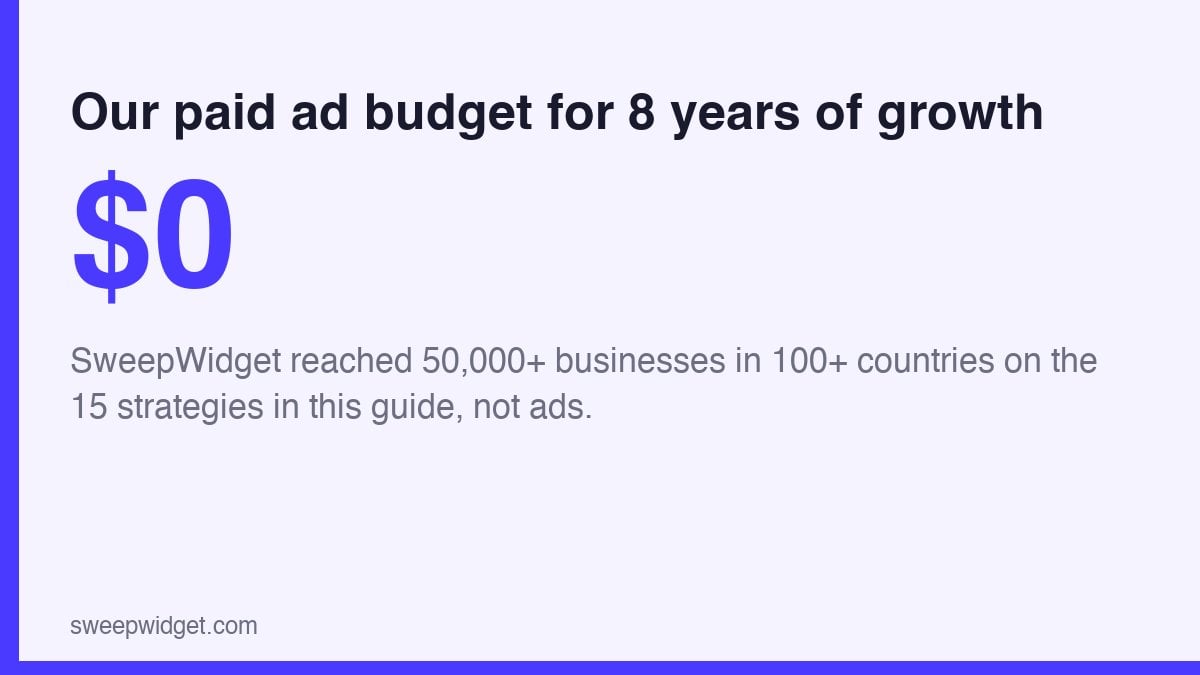
Most articles about SaaS marketing strategies are written by people who’ve never had to hit an MRR number. So here’s something different: this is the list of strategies that actually grew our business at SweepWidget. We’ve powered contests and giveaways for 50,000+ businesses across 100+ countries over 8 years, and we did it with zero paid ad spend. Every dollar of growth came from the channels below.
If you’re trying to figure out how to market your SaaS, we’ve ranked all 15 roughly by effort-to-payoff, each with a concrete way to start this week. Every single one is something we’ve either run ourselves or watched work up close for the SaaS companies using our platform.
No theory, no frameworks with clever acronyms. Just what worked.

Table of Contents
- What is SaaS marketing (and how it’s different)
- The 15 SaaS marketing strategies that actually work
- Your first SaaS marketing strategy: where to start at $0 MRR
- Frequently asked questions
- Do this next
What is SaaS marketing (and how it’s different)
SaaS marketing is the work of acquiring and keeping subscribers for software that’s sold as a recurring subscription. That word “recurring” changes everything. When someone buys a physical product, the transaction ends at checkout. When someone subscribes to your software, the transaction starts at checkout.
You’re not marketing a purchase. You’re marketing a relationship. That’s why SaaS marketing leans so hard on education, free trials, and content: the goal isn’t one conversion, it’s a customer who stays for years.
The math makes this concrete. Say it costs you $120 in time and tools to acquire a customer (your CAC). If they pay $30/mo and churn after 3 months, you collected $90 and lost $30 on the deal. But if they stay 24 months, that same $120 acquisition cost returns $720 in lifetime value, a 6x return. Same product, same price, same acquisition channel. The only variable was retention.
So every SaaS marketing strategy below is filtered through that lens. Cheap signups that churn in month one are worthless. The channels that win in SaaS are the ones that attract people who actually need what you built.
The 15 SaaS marketing strategies that actually work
Here’s the full list, ordered roughly by how much payoff you get per unit of effort. The first few are where we’d start; the later ones are longer-game SaaS growth strategies that compound once you have momentum. We only name specific SaaS marketing tools where one genuinely saves you time; everywhere else, the strategy matters more than the software.
1. Run a viral giveaway or contest
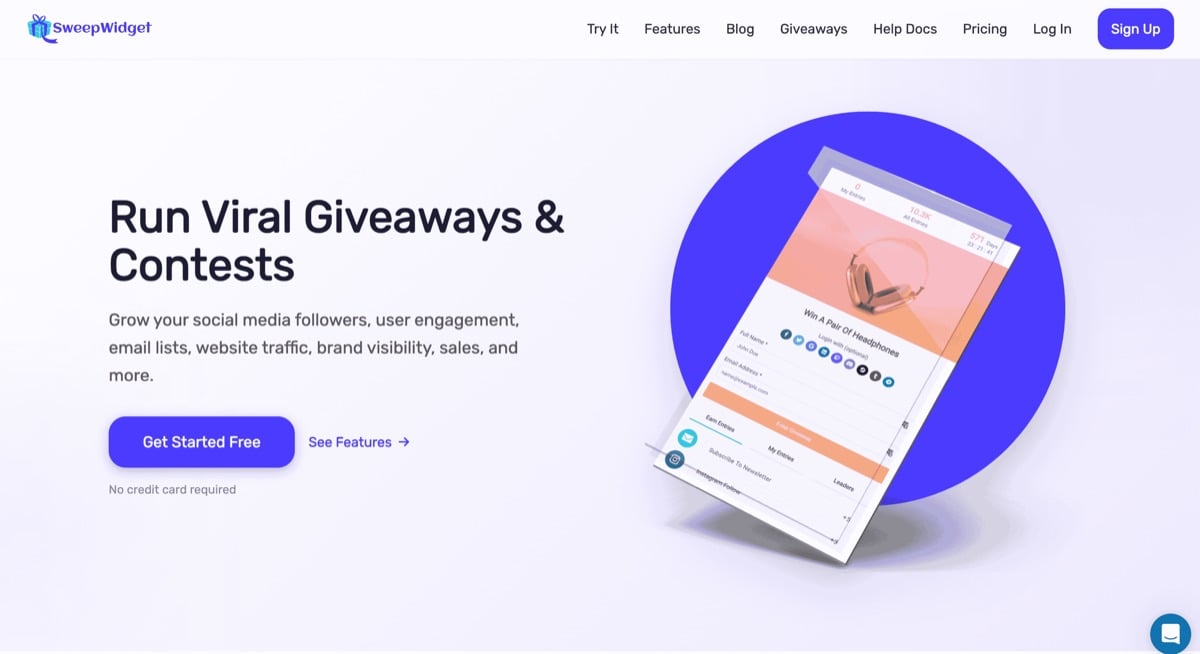
This is our home turf, so we’ll share what we actually see. A giveaway turns your existing audience into a distribution engine: people enter by following you, joining your email list, and referring friends, and every referral brings someone new into the funnel.
The numbers back this up in a big way. We analyzed 70,000+ campaigns on our platform for our giveaway marketing strategy data study, and the effect of contest design on results genuinely surprised us. Giveaways with a single entry method averaged just 163 entrants. Giveaways with 12 entry methods averaged 1,926, nearly 12x more! And duration matters too: contests running 8 to 14 days averaged 956 entrants, about 7x more than flash giveaways.
For a SaaS specifically, the trick is the prize. Don’t give away an iPad; you’ll attract iPad fans. Give away a year of your top plan plus something your ideal customer wants (a course, a conference ticket, a tool bundle). Everyone who enters is pre-qualified.
Start this week: pick a prize your ideal customer would actually use, set a 10-day duration, and include an email subscribe plus a refer-a-friend entry method. That combination builds an owned list while the referral loop runs.
2. Launch an affiliate program
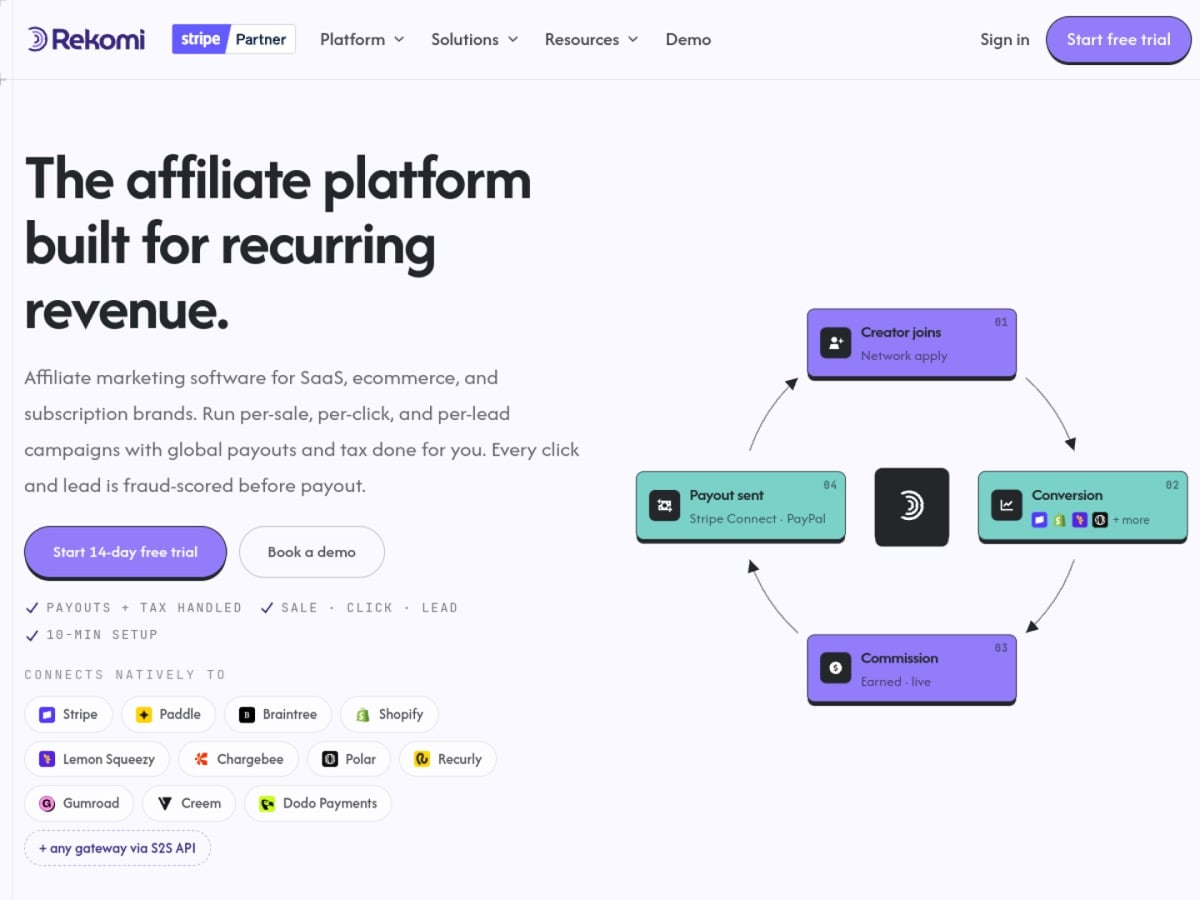
An affiliate program means other people promote your SaaS and earn a cut of the revenue they bring in. You only pay when money actually arrives, which makes it one of the few channels where the economics can’t really go upside down.
Affiliate marketing helped grow SweepWidget in multiples from where it was in the early days. Creators and bloggers who already had our audience’s trust did the convincing for us, and we paid them from revenue that wouldn’t have existed otherwise. It’s still one of our strongest channels.
The historical friction was operational: tracking referrals, calculating commissions, chasing tax forms, sending payouts every month. Modern tooling has mostly solved this. Rekomi is a good example of the newer generation built for subscription businesses: payouts and the admin around them are handled for you, and the model is pay-when-affiliates-earn rather than a big upfront platform fee.
Start this week: write a one-page program summary (commission rate, cookie window, payout schedule) and email your 10 happiest customers asking if they’d like to be founding affiliates. Warm affiliates outperform cold directories every time.
3. Get listed on review sites and independent listicles
When someone searches “best [your category] software,” they land on G2, Capterra, and a dozen blogger-written listicles. If you’re not in those articles, you don’t exist for that searcher.
Here’s the honest mechanics of how inclusion actually works, from years of being on both sides of it. Bloggers writing “best X tools” articles want to recommend tools their readers can actually try. A genuinely good free plan gets you included, because the writer can test it and the reader can start free. Meanwhile, cold emails demanding “please include us at #1” get deleted on sight. We know because we’ve deleted plenty.
Review sites work on volume and recency. A steady trickle of fresh reviews beats a burst of 50 from two years ago.
Start this week: claim your free G2 and Capterra profiles, then add a polite one-line review request to your onboarding email sequence, timed for after a user’s first success moment, not after signup.
4. SEO and evergreen content
SEO is the compounding channel: an article you publish once can send you free, qualified traffic for years. For SaaS it’s especially strong because your buyers research heavily before subscribing.
The lesson that took us longest to learn was the content mix. Review-style commercial content (“best tools,” “alternatives”) converts brilliantly, but a blog that’s nothing but buying guides looks thin to search engines and to readers. Informational content (how-tos, definitions, data) is what builds the topical authority that protects your commercial rankings. We’ve settled at roughly 60% informational, 40% commercial, and we’d hand that ratio to any SaaS starting a blog today.
Start this week: list the 10 questions prospects ask before buying your product, check which ones have weak search results (a keyword tool like Semrush makes that check quick), and write the best answer on the internet to one of them.
5. Build a quiz lead funnel
A quiz swaps the static lead magnet (“download our PDF”) for something interactive (“find out which plan fits your team in 60 seconds”). The mechanism is simple: people will trade an email address for a personalized answer far more readily than for a generic document, because the answer is about them.
Think about the exchange from the visitor’s side. A PDF asks for your email now and promises value later, maybe. A quiz delivers small value with every question, then asks for the email right when curiosity peaks, one screen before the result. That ordering is why interactive funnels routinely outconvert static ones.
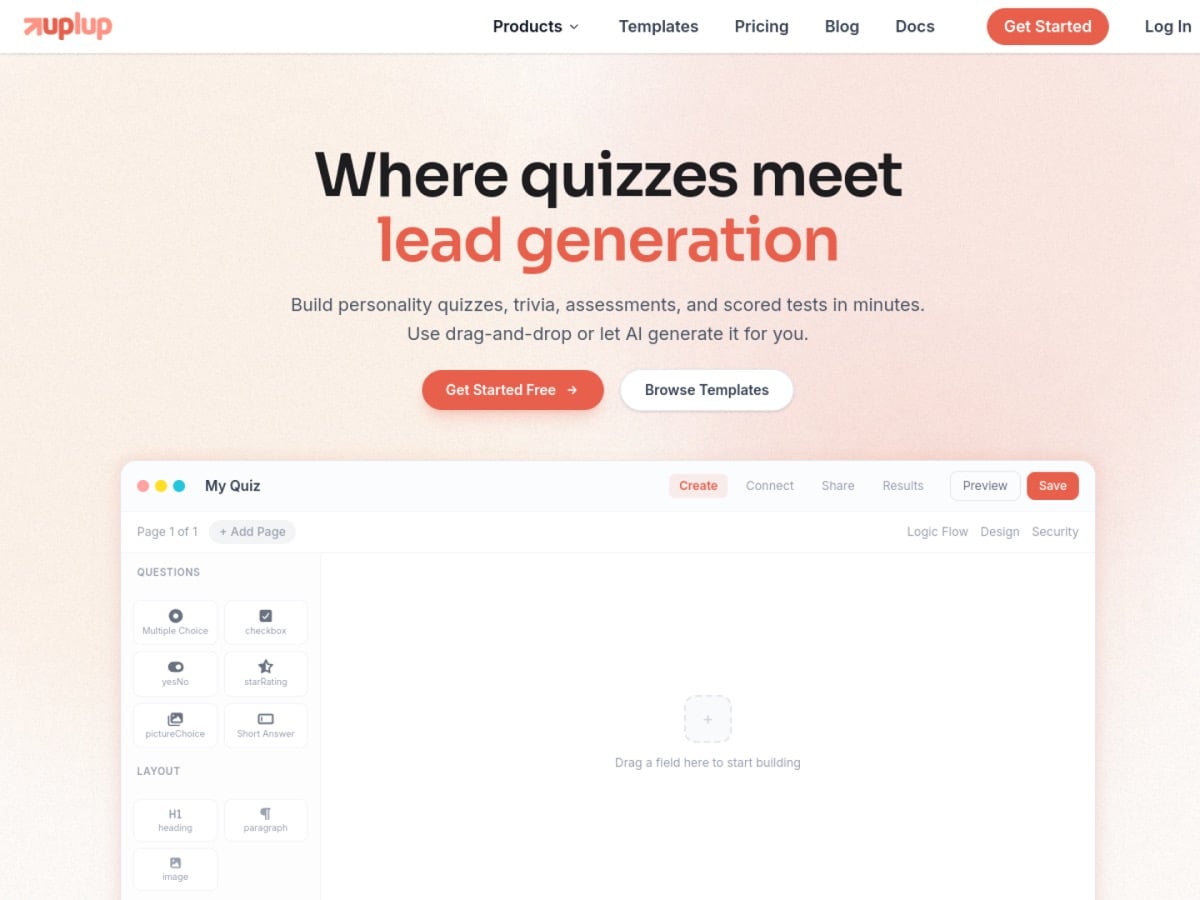
If you want to try it without building anything custom, Uplup is a quiz and form builder that can generate a working quiz with AI from a prompt and gate the results behind lead capture, so the whole funnel is one tool.
Start this week: turn your most-asked pre-sales question (“which plan do I need?”, “is this right for my use case?”) into a 5-question quiz and link it from your homepage.
6. Show up consistently on social
Social media for SaaS isn’t about going viral. It’s about being visibly alive. When a prospect checks your profile before signing up (and they do), an account that posted yesterday says “this company is healthy.” An account that last posted in March says the opposite.
Consistency beats virality because the audience compounds quietly. Three useful posts a week for a year is 150+ touchpoints with people who are slowly deciding whether to trust you. One viral hit is a spike of strangers who mostly forget you by Friday.
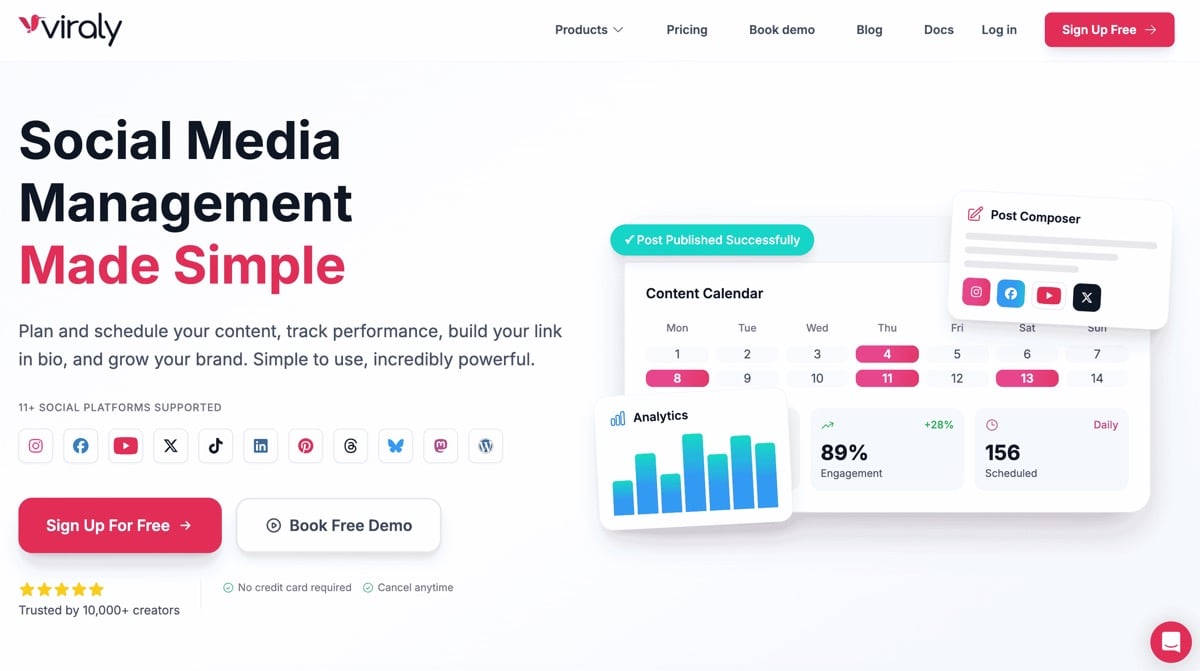
The practical blocker is that daily posting across platforms is a grind, which is why a scheduler is worth having. Viraly is a solid option: batch a week of posts in one sitting, and the consistency takes care of itself.
Start this week: write 5 posts in one hour (a customer win, a product tip, a lesson learned, a question, a behind-the-scenes note) and schedule them across the week. Repeat next Monday.
7. Creator and influencer partnerships
A YouTube review of your product is SEO in video form. Someone searches “[your product] review” or “[your category] tutorial” three years from now, and that video is still there, still converting. Written sponsorships evaporate; video reviews compound.
The economics surprise most founders. Mega-influencers charge mega rates, but niche creators with 5,000 to 50,000 subscribers in your exact category often charge a few hundred dollars, and their audiences trust them more, not less.
One rule we hold firmly: pay for honest reviews, never for scripts. A creator reading your marketing copy is an ad everyone can smell. A creator showing your product’s real strengths and real quirks is a recommendation, and the credibility is the whole point of the channel.
Start this week: search YouTube for your category, list every creator under 100k subscribers who reviews tools like yours, and email the top 5 offering a free account and an honest-review sponsorship.
8. Publish original data studies
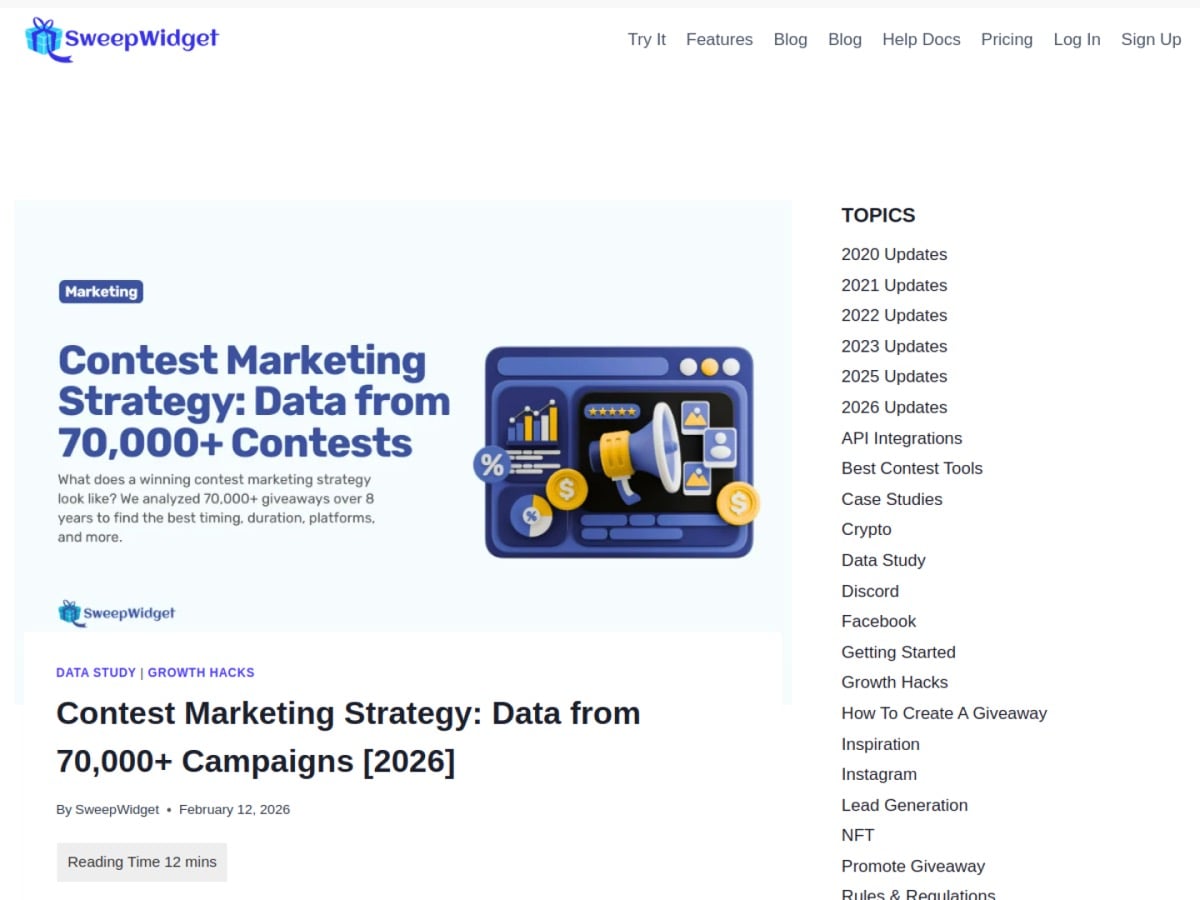
If you run a SaaS, you’re sitting on data nobody else has. Publishing it creates the one type of content that can’t be copied by a competitor with a keyboard: they don’t have your numbers.
We’ll use ourselves as the worked example. We pulled the stats from 70,000+ campaigns on our platform and published the whole thing: which entry methods actually get completed, the ideal contest length, the U-curve of when entries arrive. Writing it was the first time we’d really sat down with 8 years of our own data, and honestly, it was the most fun we’ve had writing anything for our blog.
The payoff is different from normal content. Data studies earn citations and backlinks from other writers who need a statistic to reference, and every citation strengthens the whole domain. Informational posts attract readers; data studies attract other publishers.
Start this week: query your own database for one interesting aggregate (average usage patterns, most popular feature, a surprising correlation), anonymize it, and publish it as a short post with one chart.

9. Live in the communities
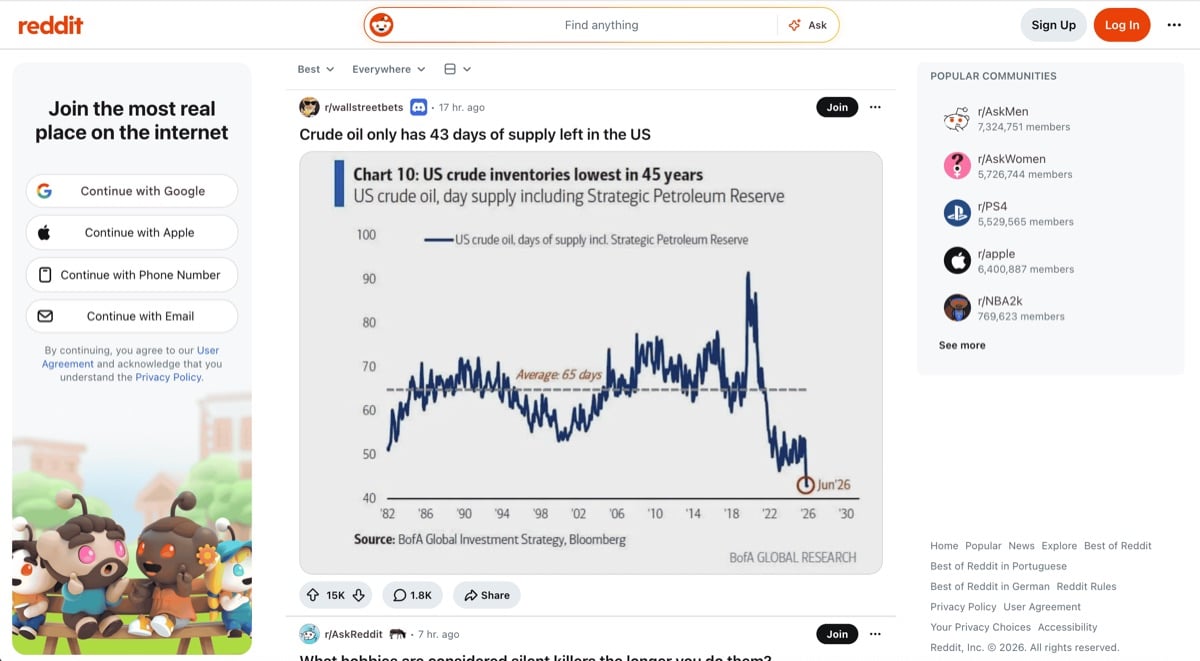
Reddit, indie hacker forums, niche Slack and Discord groups: your future customers are already there, asking questions your product answers. The channel is free. The price is patience.
The rule that makes it work: answer questions for a year before you ever drop a link. Communities have finely tuned radar for founders who show up to extract value, and one promotional post from an unknown account can get you banned and quietly poison the brand. But a known, helpful regular who occasionally mentions “I actually build a tool for this” gets welcomed, upvoted, and remembered.
The compounding is real too. Good answers on Reddit rank in Google for years, so a thoughtful reply keeps introducing you to searchers long after the thread dies.
Start this week: find the 3 communities where your customers hang out, create an account, and answer 2 questions with zero mention of your product. Set a weekly reminder and keep going.
10. Ship a free tool
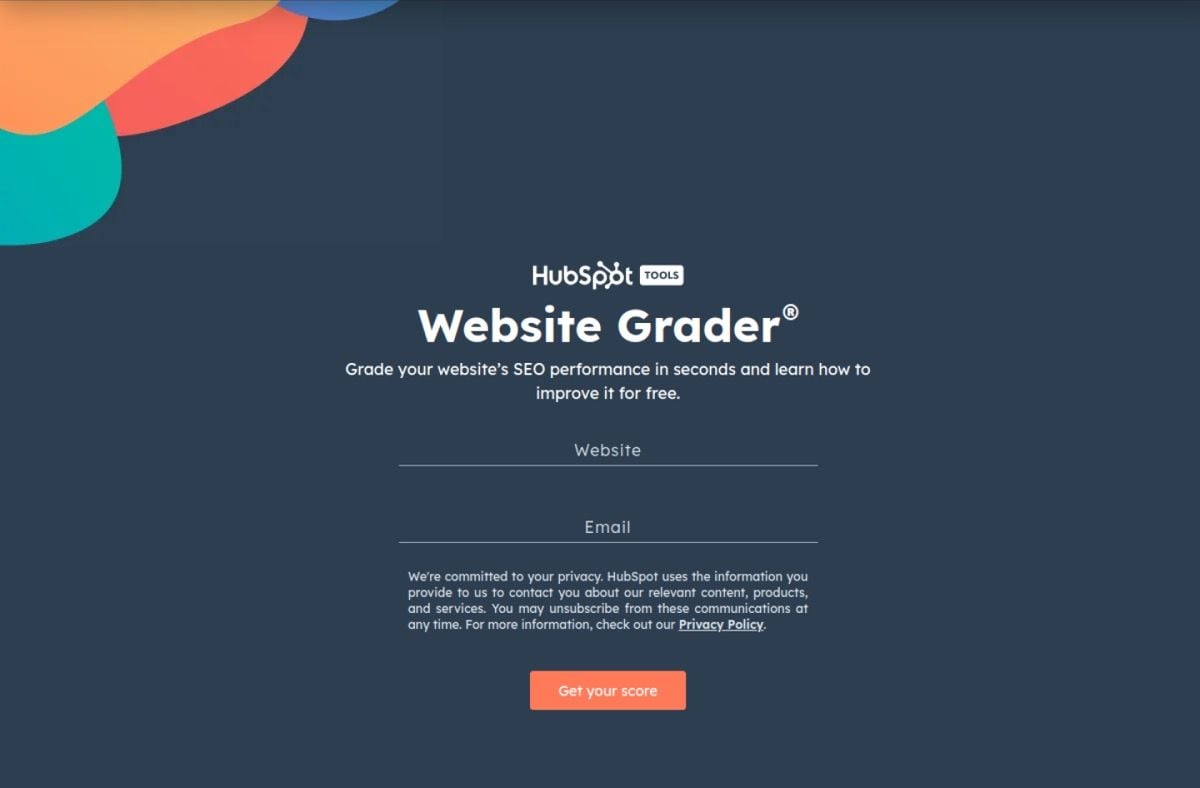
A free generator, calculator, or checker related to your product is a permanent top-of-funnel asset. People search for “roi calculator,” “policy generator,” “headline analyzer” and similar phrases with real volume, and almost nobody wants to pay for a one-off utility. So a free tool ranks, gets bookmarked, gets shared, and quietly introduces your brand to exactly the audience that needs your paid product. HubSpot’s free Website Grader is the classic example, and it’s been feeding their funnel for over a decade.
The honest reason these compound is that they’re the rare marketing asset with zero decay. A blog post ages, an ad stops when the budget stops, a social post dies in a day. A useful free tool keeps working because the searcher’s need keeps recurring, and every link it earns is a link to your domain. That asymmetry is why we’d put a free tool ahead of another month of blog posts for most SaaS teams.
Start this week: list the manual calculations or tedious tasks your customers do right before they need your product, and spec the simplest single-page tool that does one of them free.
11. Email lifecycle and nurture
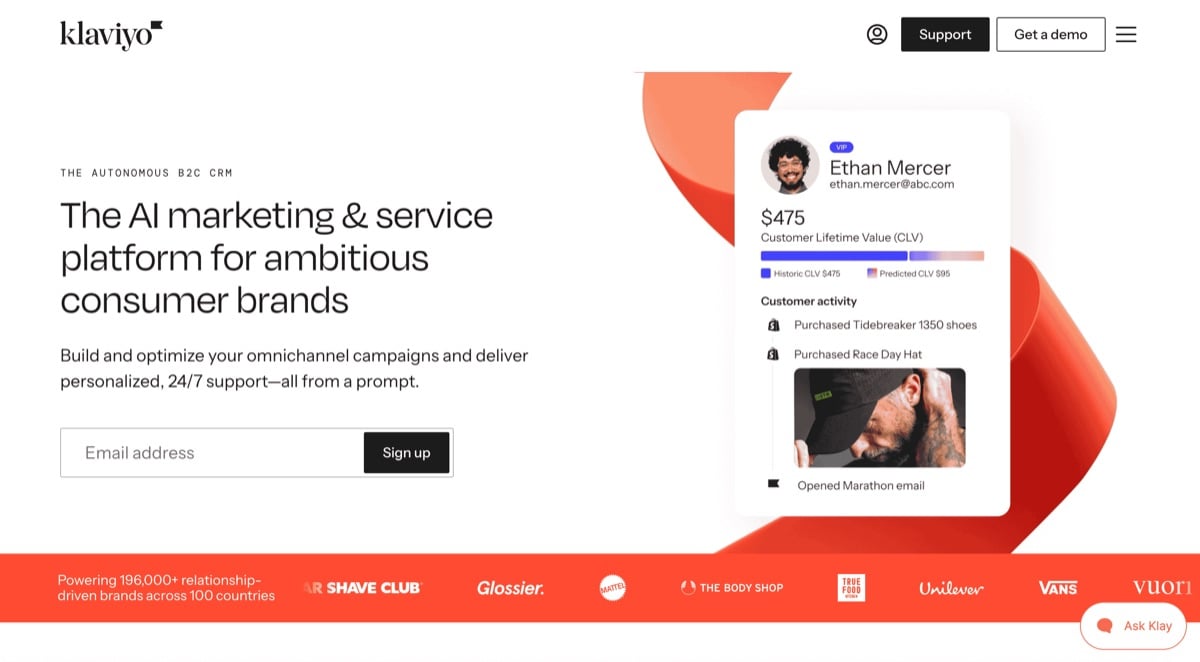
Email is the least glamorous channel in SaaS and quietly one of the highest-ROI ones. You own the list, no algorithm sits between you and the reader, and the marginal cost of a send is nothing. Platforms like Klaviyo handle the automation side, so the sequences below run themselves once they’re written.
Three sequences carry most of the weight:
- Welcome series: 3 to 5 emails after signup that walk a new user to their first success moment. Activation is the strongest churn predictor you can influence, and this sequence is your main lever on it.
- Feature-launch notes: short, plain-text notes when you ship something meaningful. Users churn from products that feel stagnant; shipping visibly is retention marketing.
- Win-back: a simple “we’ve added a lot since you left” email to lapsed trials and churned users. These convert surprisingly well because the hardest part, awareness, is already done.
Start this week: write a 3-email welcome series pointing every new signup toward the one action your data says predicts retention.
12. Integrations and partnerships
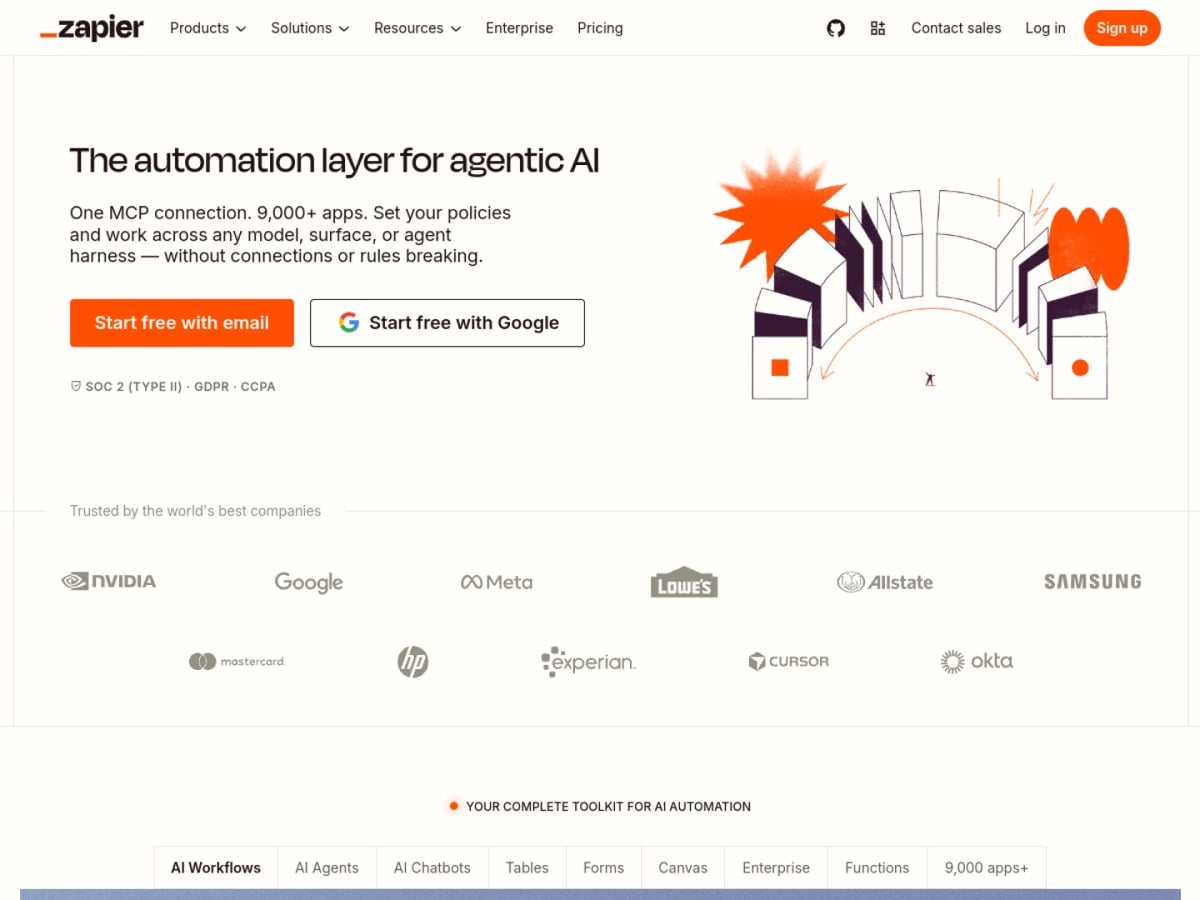
Every tool your customers already use has a marketplace or integrations directory, and every listing in one is free distribution. Someone browsing their CRM’s app marketplace for “forms” or “scheduling” is a high-intent buyer you didn’t pay to reach.
This is why API-first thinking is a marketing decision, not just an engineering one. A public API plus a Zapier listing plus a few native integrations puts you inside the daily workflow of platforms with millions of users. Partnerships stack on top: co-marketing with a complementary tool means trading audiences with a company that already earned your prospects’ trust.
Start this week: identify the 3 tools most of your customers already use, and get listed in whichever of their directories has the lowest barrier. Even a basic Zapier integration earns a listing.
13. Launch on Product Hunt and launch platforms
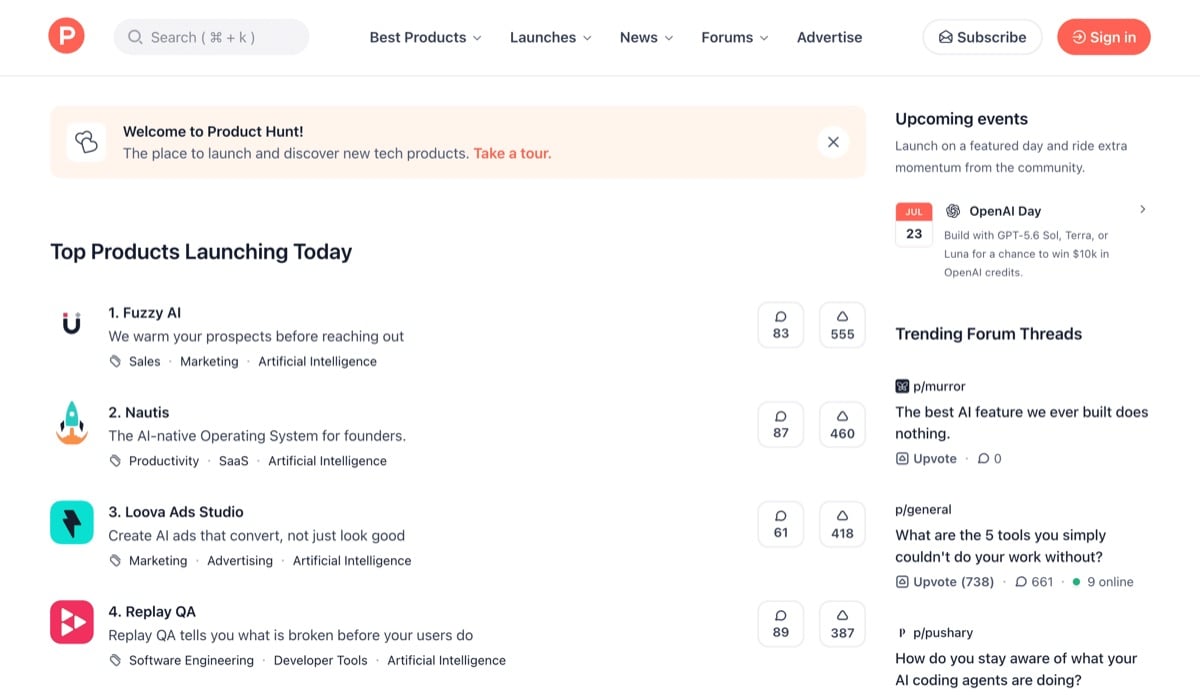
Let’s be precise about what a Product Hunt launch buys you, because founders routinely overweight it. A good launch gets you a traffic spike for 48 hours, a solid backlink, a badge for your homepage, and a burst of feedback from tool-curious early adopters. Those are real, and the social proof keeps working long after launch day.
What it doesn’t get you is durable growth. The audience is other makers and early adopters, not necessarily your buyers, and the spike decays within a week. Treat a launch as a milestone amplifier: one solid day of attention plus permanent credibility assets. Plan it, enjoy it, then get back to the compounding channels.
Start this week: if you’ve never launched, start a teaser page on Product Hunt and spend 30 minutes studying the top 3 launches in your category from the past year.
14. Cold outreach that doesn’t feel cold
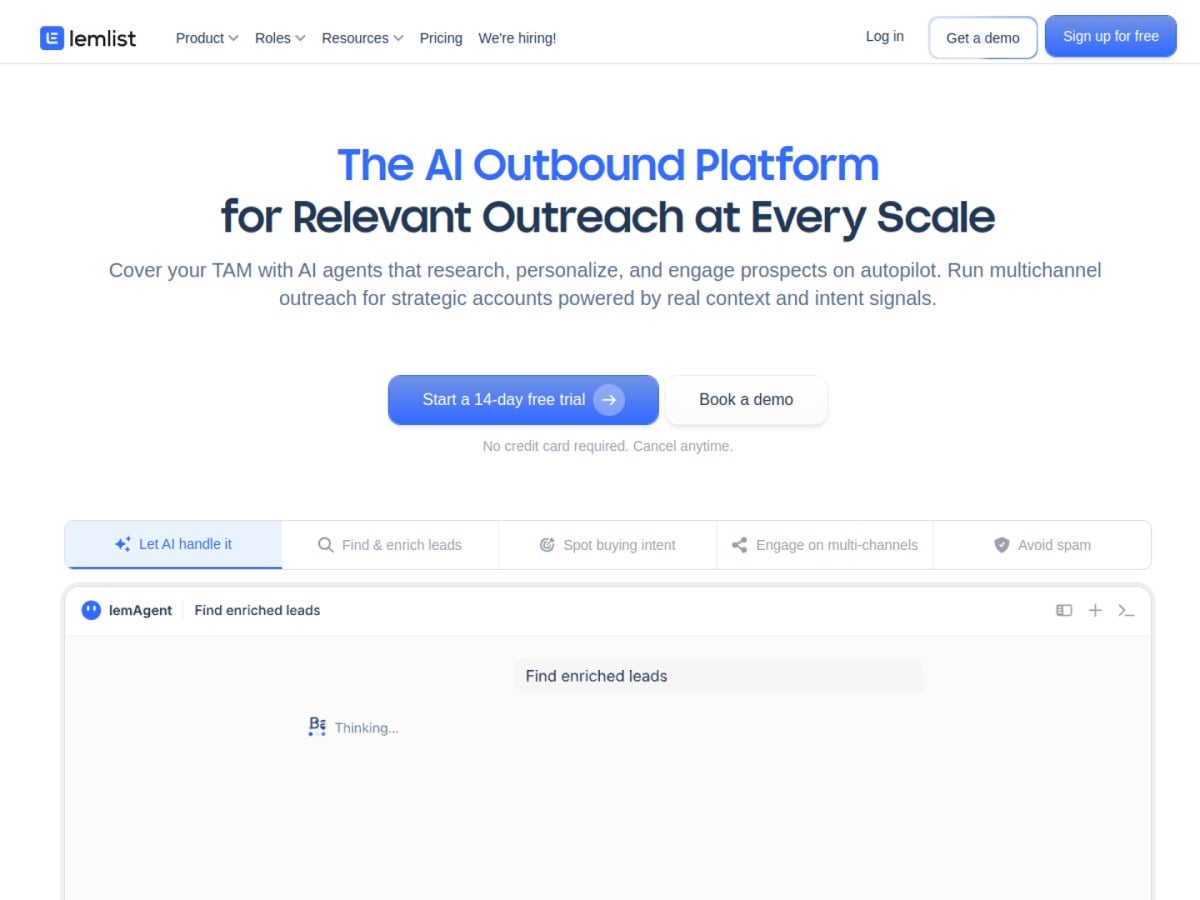
Cold email still works for SaaS, but almost everyone sends the wrong kind. Most outreach fails on time-cost: the classic “do you have 15 minutes for a quick call?” asks a stranger for their scarcest resource before demonstrating any value. Deleted.
The version that works inverts it:
- Brevity: under 100 words. A long email from a stranger is a chore.
- What’s in it for them, in the first two lines. Not your funding round or your feature list. Their problem, named specifically, and a hint you can fix it.
- A tiny ask. “Worth a look?” with a link they can check in 30 seconds beats any calendar demand. Let them escalate the commitment.
Relevance does the heavy lifting: 20 researched emails to companies with the exact problem you solve will outperform 2,000 sprayed ones, without burning your domain reputation.
Start this week: write a 3-sentence template (their problem, your one-line fix, a 30-second ask) and send 10 researched emails, by hand or with an outreach tool like lemlist or Apollo. Track replies, not opens.
15. Customer case studies and social proof
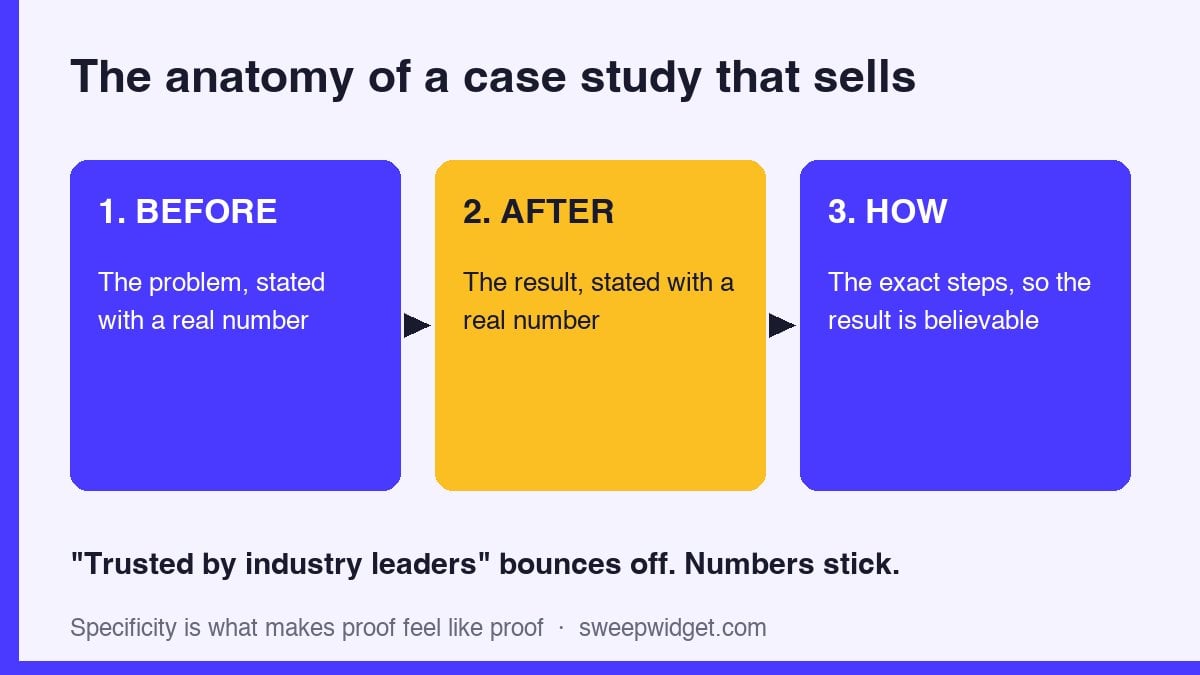
Real numbers from real customers beat adjectives, every time. “Trusted by industry leaders” bounces off a skeptical prospect; “this company ran a campaign and here’s exactly what happened, with figures” sticks. Specificity is what makes proof feel like proof.
Case studies also do double duty. They’re bottom-of-funnel sales content for prospects comparing options, and they’re relationship builders with the featured customer, who almost always shares the piece with their own audience.
Customers with good results usually enjoy being featured; the ask is flattering, not imposing.
Start this week: email your 3 best customers, ask for 20 minutes and permission to share their numbers, and structure each story as before, after, and how.
Your first SaaS marketing strategy: where to start at $0 MRR
Fifteen strategies is a menu, not a to-do list. Nobody should run all of them; a realistic SaaS marketing plan runs 2 or 3 of them well, and at $0 MRR you should run exactly 3. If we were starting a brand-new SaaS today, here’s the order we’d go in.
First: communities (strategy 9). Before you have customers, you need to be where they are, learning the exact words they use to describe their problem. The listening is worth as much as the visibility; it’ll sharpen your landing page, your onboarding, and your next 6 months of content.
Second: cold outreach (strategy 14). It’s the only channel on this list where you control the volume on day one. SEO takes months and giveaways need some audience to seed them, but you can send 10 sharp, researched emails this afternoon. It’s also the anchor of almost every early B2B SaaS marketing strategy. Your first 10 customers almost certainly come from direct conversations anyway, and those conversations teach you what to build next.
Third: SEO and evergreen content (strategy 4). Start this early precisely because it’s slow. Content planted now pays off in months 6 through 24, right when you’ll desperately want a channel that doesn’t require your hands every day. One good article a week, aimed at the questions you’re already hearing in communities and outreach replies.
Then, once you have an email list and a small audience, layer in a giveaway to multiply it. That’s the point where the viral mechanics have something to work with.
Frequently asked questions
What is SaaS marketing?
SaaS marketing is the process of attracting, converting, and retaining subscribers for software sold on a recurring subscription. It differs from traditional marketing because the sale isn’t the finish line: revenue arrives monthly over the customer’s lifetime, so education, free trials, onboarding, and retention matter as much as acquisition. The best SaaS marketing strategies are the ones that attract users who stay, not just users who sign up.
What are the best SaaS marketing strategies for a new product?
For a brand-new product, the best SaaS marketing strategy to start with is community participation, followed by targeted cold outreach and SEO content. Communities teach you your customers’ language, outreach gets you your first paying users this month, and content planted early compounds into free traffic by the time you need it. Add a giveaway once you have a small audience to seed it, and an affiliate program once you have customers happy enough to promote you.
How do I market a SaaS product with no budget?
The honest answer to how to market a SaaS product with no budget is to spend time instead of money: answer questions in communities where your customers gather, send short researched cold emails, publish content targeting questions prospects already search for, and list your product on free directories like G2, Capterra, and Product Hunt. Our own experience backs this up: SweepWidget grew to 50,000+ businesses with zero paid ad spend, built almost entirely on the organic strategies in this article.
How much should a SaaS company spend on marketing?
There’s no single right number, but let unit economics set the ceiling: keep your customer acquisition cost at roughly a third of lifetime value or less. Early-stage SaaS companies chasing growth often spend aggressively, while profitable bootstrapped companies commonly hold marketing to 10 to 25% of revenue. Whatever the budget, weight it toward compounding channels (SEO, data studies, free tools, affiliates) over channels that stop the moment you stop paying.
Do this next
Don’t try to bolt on 5 new channels this quarter. Pick the one SaaS marketing strategy from this list that fits where you are right now, and do its “start this week” step before Friday. One channel run consistently beats five run occasionally, every time.